


Which badminton racket is right for you? – The ultimate guide to choosing a racket
How to find the right badminton racket – criteria for your selection
A suitable badminton racket can significantly improve your game: it increases comfort, improves control – and is simply more fun. But which badminton racket is right for you? This comprehensive guide will help you find the perfect racket for your playing style and skill level.
We'll look at the most important criteria: weight, balance, grip, stringing, and playing level. Whether you're a beginner or a pro – with this badminton racket guide, you'll make the right choice.
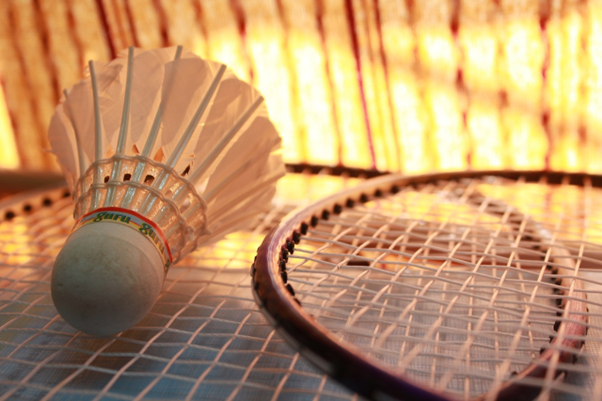
Badminton racket advice for beginners, advanced players and professionals
Beginner – Simple controls and forgiving of mistakes
As a beginner, you benefit from lightweight clubs with flexible shafts and a balanced feel:
- Weight: under 85 g
- Balance: Even Balance (balanced)
- Flexibility: flexible
- Grip: comfortable base grip
This combination helps you control your stroke, reduces the strain on your arm, and increases reaction speed.
Advanced users – More power and precision
Advanced players can generate more power and play more precisely with a stiffer frame:
- Weight: 85–90 g
- Balance: top-heavy for attacking players, even balance for versatility
- Flexibility: medium
The better your technique, the more you can get out of a racket tailored to you.
Professionals – Maximum control and customization
Professionals rely on individually tailored rackets with maximum precision:
- Weight: >90 g
- Balance: often top-heavy
- Flexibility: stiff
- Stringing: high tension (10–12+ kg)
- Handle: individually wrapped (e.g., Towel Grip)
Control is paramount. Every aspect of the racket is tailored to the individual's style.
Badminton racket test: Materials and construction compared
Choosing the right badminton racket depends heavily on the material and construction, as these characteristics significantly influence feel, control, and power. The material used plays a particularly crucial role:
-
Aluminum: inexpensive, robust and particularly suitable for beginners, but somewhat heavier and less dynamic in play.
-
Steel: extremely durable and stable, but is hardly used today because its weight makes handling difficult.
-
Carbon/Graphite: lightweight, flexible and high-performance – ideal for ambitious players who value speed and precision.
The higher the skill level, the more worthwhile it is to invest in a high-quality racket made of carbon or a carbon composite material. These models offer better shot control and allow for faster reactions.
Another important aspect is the shape of the racket head:
-
The isometric design features a wider clubface and therefore a larger sweet spot – making it particularly forgiving of off-center hits. Ideal for beginners or all-round players.
-
Oval: has a smaller, more concentrated sweet spot, which allows for greater precision. This shape is often preferred by experienced players who are technically skilled and want to make accurate shots.
In addition to material and shape, grip size, string tension and balance point should also be taken into account – because only a racket that is well suited to one's own playing style can unleash its full potential on the field.
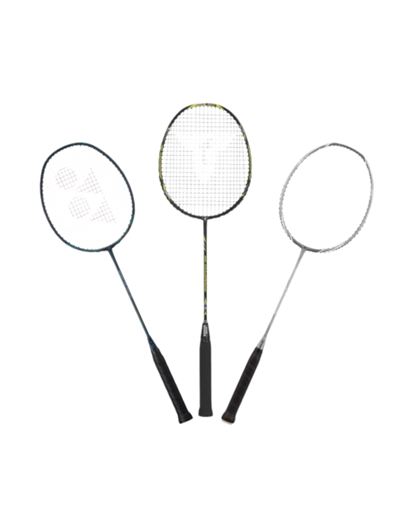
Choosing the right badminton racket: Weight, balance and flexibility explained
When choosing a badminton racket, weight, balance, and flexibility are crucial for feel and performance. These factors should match your individual style and skill level to unlock your full potential on the court.
Weight:
-
Lightweight (<85 g): Very agile and easy to control, ideal for beginners and fast players who focus on fast rallies.
-
Medium (85–90g): A good mix of control and power, perfect for all-rounders who like both precise and powerful shots.
-
Heavy (>90g): More impact power, but less agile – more suitable for experienced players with secure technique.
Balance:
-
Top-heavy: More power, ideal for powerful smashes and offensive play.
-
Handle-heavy: Higher control, good for beginners or defensive playing styles.
-
Balanced: A mix of power and control, ideal for frequent players and flexible tactics.
Flexibility:
-
Flexible: Energy-saving and forgiving of mistakes, especially suitable for beginners and makes timing easier.
-
Stiff: More precise and faster, requires good technique and rewards experienced players with more control.
The right combination of these qualities helps to improve the game and specifically boost personal performance.
Badminton racket stringing – Which tension suits you?
The stringing of a badminton racket has a significant impact on the feel and power of the shot. String tension plays a crucial role in this:
-
Low tension (8–10 kg): Offers more power and a larger sweet spot, which is more forgiving and makes it easier for beginners to play.
-
High tension (10–12+ kg): Allows more control and precision, but has a smaller sweet spot – therefore, advanced players and professionals prefer this tension for maximum accuracy.
Beginners should therefore opt for lower voltages, while experienced players benefit from higher voltages.
The strings should be changed regularly, especially if:
- visible wear and tear or cracks on the strings
- intensive use, such as regular training several times a week
This ensures a consistent playing feel and maintains the performance of the racket.
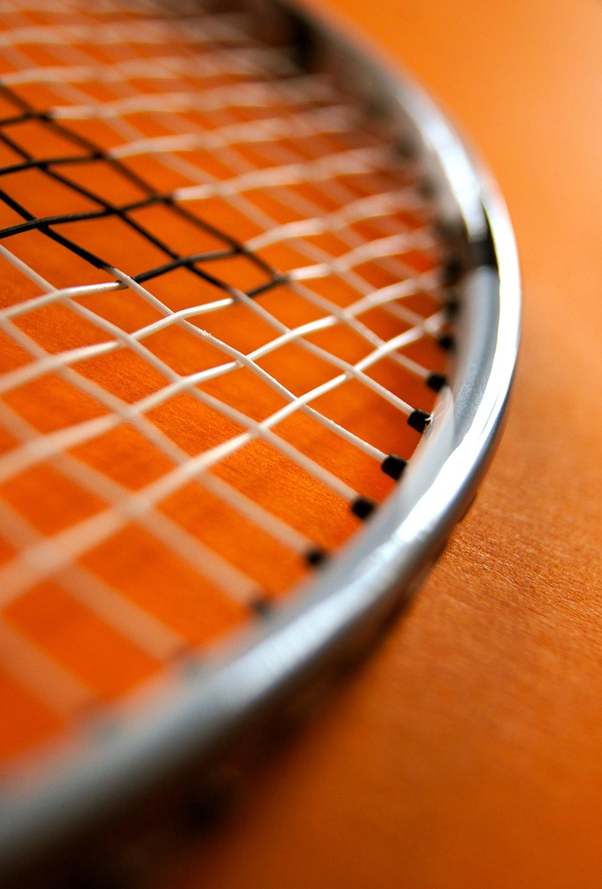
Badminton racket grip – How to hold a badminton racket correctly
Correct racket grip is crucial for precision and control in badminton. The most common method is the V-grip or handshake technique, where the racket is held like a handshake – ergonomically and safely.
Grip types:
-
Basegrip: The standard grip, directly on the stick, offers stable control.
-
Overgrip: Wrapped around the basegrip, providing better grip and more comfort.
-
Towel Grip: An absorbent grip, ideal for sweaty hands to prevent slipping.
To ensure the grip always fits perfectly and remains hygienic, you should replace or renew it regularly. This will not only improve your playing comfort but also your performance on the field.
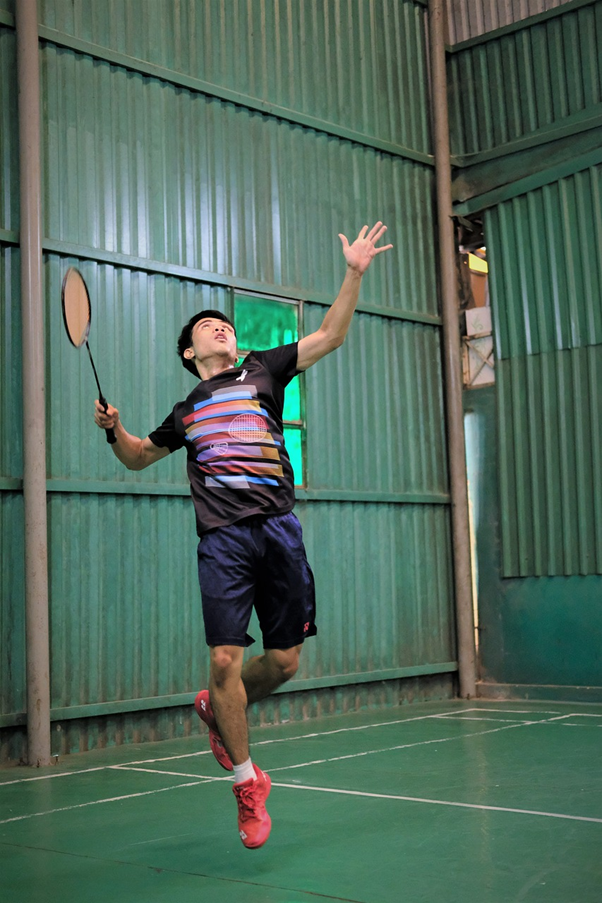
Badminton racket recommendations – Suitable for your game
Offensive playing style:
- Top-heavy balance
- Stiff shaft
- String tension 10–12+ kg
- Weight: 85–92g
Perfect for powerful smashes and an aggressive playing style. Especially suitable for singles players and offensive doubles partners.
Defensive / Control-oriented style:
- Handle-heavy or balanced
- Flexible shaft
- String tension 8–10 kg
- Weight: under 85 g
Ideal for quick reactions, net play, and long rallies. Gentle on the arm and shoulder.
Versatile style:
- Balanced balance
- Medium flexibility
- String tension approx. 10 kg
- Weight: 85–89 g
Recommended for hobby players and club players with a mixed playing style.
Tip: Choose your racket according to your typical playing style. Try different rackets if you play both singles and doubles.
Bonus – Which tennis racket suits me?
When choosing a tennis racket, similar criteria play a crucial role as in badminton. Weight, balance, grip size, and your own playing strength determine which racket suits you best. Therefore, sound purchasing advice is just as important to find the ideal tennis racket that optimally supports your game and offers you more control and comfort on the court. Use these basic principles as a guide when making your selection and test different models to find the best feel.
- Weight
- balance
- Handle size
- Playing strength
A sound buying guide for tennis rackets is just as important as it is for badminton. If you're wondering which tennis racket is right for you, follow the same principles.
Your badminton racket check – find your racket
Several factors play an important role when buying a racket; these should match your playing style and skill level:
-
Player type: Beginners tend to prefer lighter, more forgiving rackets; advanced players prefer more precise and powerful models.
-
Weight: Light (<85g) for fast maneuverability, medium (85–90g) as an all-rounder, heavy (>90g) for more power.
-
Balance: Head-heavy for more power, handle-heavy for better control, balanced for flexible playing styles.
-
Stringing: Low tension (8–10 kg) for more power and forgiveness, high tension (10–12+ kg) for better control and precision.
-
Handle: Appropriate handle thickness and regular replacement for comfort and a secure grip.
Checklist for your racket:
- Am I a beginner or an experienced player?
- Do I prefer control or power?
- Do I want a lighter or heavier racket?
- What balance feels comfortable to me?
- What should the string tension be?
- Is my grip comfortable and does it not slip?
If possible, test different types of rackets to find out which combination of weight, balance, and flexibility suits you best. This way, you're guaranteed to find your perfect badminton racket!
Speed and agility exercises: How you can improve your performance with a complete workout
15 game ideas for the gym: From warm-up games to team games for elementary school
Related Posts

How to improve your shooting in basketball

Volleyball Rules

The history of basketball

How to install a basketball net in 5 steps

How high is a volleyball net?

15 game ideas for the gym: From warm-up games to team games for elementary school


