


What is the size of a handball goal?
Handball is a dynamic and fast-paced team sport that can be played both indoors and outdoors. A central element of the game is the handball goal, through which goals are scored, which is the objective of each team. The exact dimensions of the handball goal are crucial to ensuring a fair and standardized game. This ensures that players worldwide play under the same conditions, thereby ensuring competitive integrity and equal opportunities.
The official size of a handball goal is internationally defined: it is 3 meters wide and 2 meters high. These dimensions are laid down in the official handball rules of the International Handball Federation (IHF). The depth of the goal is 1.2 meters, which provides sufficient space to catch the ball and defend the goal.
Knowing these dimensions is very important for players, coaches, and referees. Players must adapt their shooting techniques and goal defense strategies accordingly, while coaches must tailor their training sessions to these standards. Referees, in turn, must ensure that the goals comply with the prescribed standards in order to guarantee a game that conforms to the rules.
In summary, the exact dimensions and parameters of handball goals are essential to ensure uniform playing conditions and the integrity of the sport. This is the only way to ensure that every game is fair and exciting.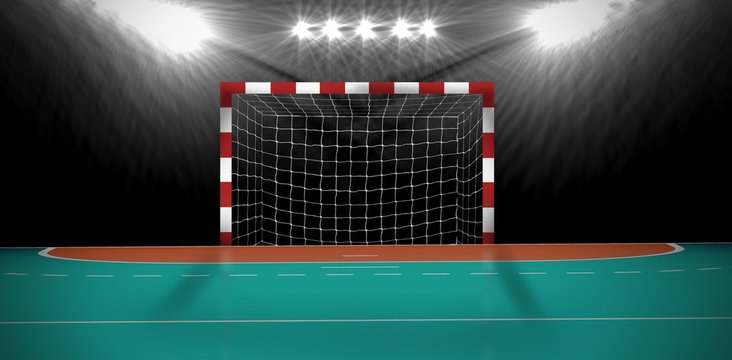
The importance of handball goals
The importance of handball goals cannot be overstated, as they play a central role in determining victory and defeat in handball. Goals are the main objective of the game: each team tries to throw the ball into the opponent's goal to score points. The team with the most goals wins the game, making goals the decisive factor.
Handball goals play a key role in several aspects of the game:
Objective of the game: The main objective of each team is to score goals while preventing the opposing team from scoring. The number of goals scored directly determines the winner of the game.
Game strategy: The position and size of the goals influence the tactics and strategies of the teams. Attacking strategies are developed to find the best ways to get the ball into the goal, while defensive strategies aim to defend the goal and thwart attacks.
Player development: Players train specific skills such as throwing accuracy, goalkeeping skills, and defensive techniques, all of which are directly related to handball goals. A comprehensive understanding of goal dimensions and the dynamics of the goal area is crucial for developing these skills.
Rule compliance and fairness: The exact dimensions of handball goals (3 meters wide and 2 meters high) are internationally standardized and specified in the rules of the International Handball Federation (IHF). This standardization ensures that all games are played under the same conditions, guaranteeing fairness and equal opportunities in competition.
The correct dimensions of the goals are therefore essential to ensure fair play and compliance with the rules. A goal that is too large or too small could significantly distort the game by either making it easier or more difficult to score goals. This would compromise the integrity of the game and could lead to unfair results.
Overall, handball goals are not just a simple target, but a central element that determines the style of play, tactics, and ultimately the outcome of the game. Adherence to the correct dimensions is essential to ensure an exciting, fair, and balanced game.
The official size of a handball goal
How big is a handball goal? The official size of a handball goal is clearly defined and standardized worldwide to ensure the integrity and fairness of the game. According to the international rules of the International Handball Federation (IHF), the dimensions of a handball goal are:
Height: 2 meters
Width: 3 meters
These handball goal dimensions are standardized and apply to all handball games, regardless of whether they are played at the national or international level. This standardization ensures that all players, regardless of the country they play in, compete under the same conditions.
How wide is a handball goal? The standard dimensions of the handball goal have several important functions:
Fairness and equal opportunities: The worldwide standardization of goal sizes ensures that no team is disadvantaged or favored by different goal sizes. This contributes to fairness in competition.
Comparability of performance: Standardized goal sizes allow for a comparable assessment of the performance of players and teams, regardless of their geographical location. Players and coaches can tailor their strategies and techniques to a fixed size, which increases the consistency and comparability of games.
Compliance with rules: Compliance with official dimensions is a fundamental requirement for a handball game to comply with the rules. Before each game, referees check that the goals comply with the prescribed dimensions to ensure that the game is played correctly and fairly.
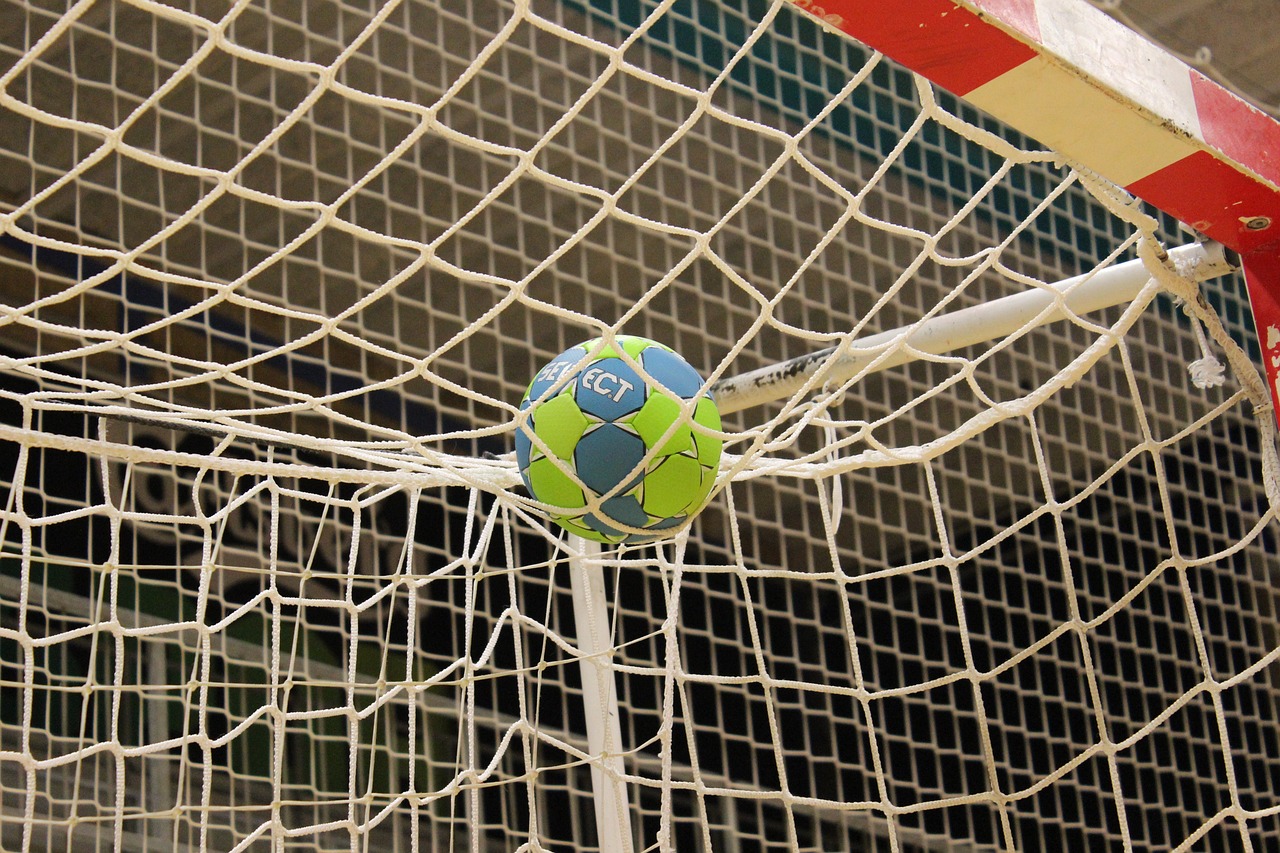
How tall is a handball goal? The official handball goal size of 2 meters in height and 3 meters in width is therefore not just a technical specification, but a central component of the rules of the game, ensuring the structure and fairness of handball worldwide.
Special rules for youth teams
For youth teams, especially for players aged 8 to 10, special rules apply regarding the size of the handball goal in order to accommodate the physical and technical abilities of young players. These adjusted dimensions enable children to learn and play the sport under fair and age-appropriate conditions.
The special goal dimensions for this age group are:
Height: 1.60 meters
Width: 3 meters
These adjustments apply to both boys and girls and are designed to make the game more accessible and playable for young players. The reduced goal height ensures that children can perform successfully with their physical abilities without being overwhelmed.
The special goal dimensions for youth teams have several advantages:
Promotion of game development: Younger players can develop their throwing and defensive techniques better because the reduced goal height corresponds to their physical abilities. This makes it easier to learn the basic techniques and increases motivation and enjoyment of the game.
Safety and fairness: Adjusting the goal size ensures that games are safe and fair. Goals that are too high could overwhelm younger players and increase the risk of injury.
Equality for all genders: The rule that the special goal dimensions apply equally to boys and girls promotes equality and ensures that all children play under the same conditions.
Age-appropriate challenges: The adjusted dimensions offer children age-appropriate challenges that promote their skills and self-confidence. This supports positive athletic development and prepares them for future competitions with official goal dimensions.
In summary, the special goal dimensions for youth teams allow young players to experience handball in an environment tailored to their physical and technical abilities. Reducing the goal height to 1.60 meters, while keeping the width at 3 meters, ensures that both boys and girls have the best possible conditions to develop their skills and enjoy the game.
In summary, the special goal dimensions for youth teams enable young players to experience handball in an environment that is tailored to their physical and technical abilities. Reducing the goal height to 1.60 meters, while maintaining the width of 3 meters, ensures that both boys and girls have the best possible conditions to develop their skills and enjoy the sport with success.
Material and quality of handball goals
Materials used in handball goals
Most modern handball goals are made of aluminum. Aluminum is preferred for several reasons:
Lightweight: Aluminum is much lighter than other materials such as steel or wood. This makes the goals easier to transport and install.
Durability: Aluminum is corrosion-resistant and durable, making it ideal for use in sports halls and outdoors. It resists rust and weathering, which extends the life of the goals.
Safety: Aluminum provides a stable and robust structure that is also safe for players. It has no sharp edges and is less susceptible to damage that could cause injury.
Low maintenance: Unlike wood, aluminum requires less maintenance. It does not need to be painted or treated to keep it in good condition.
Development from wood to aluminum
In the past, handball goals were often made of wood. Wood was readily available and easy to work with. However, wood has lost popularity over time:
Maintenance: Wood requires regular care, such as painting and protection from moisture and pest infestation.
Weight: Wood is heavier than aluminum, which makes transporting and handling the goals more difficult.
Durability: Wood is more susceptible to damage from moisture, insects, and wear and tear, which shortens the lifespan of the goals.
Requirements for the shape and size of the posts and crossbar
The International Handball Rules specify requirements for the shape and size of the posts and crossbar to ensure standardization and safety:
Profile: The posts and crossbar must have a square profile.
Side length: The side length of the profile is 8 cm (80 mm).
These standardized dimensions are important to ensure that the goals offer the same playing conditions everywhere. The square shape provides a clear and consistent boundary for the goal area, while the side length of 8 cm provides the necessary stability and visibility.
In summary, modern handball goals are usually made of aluminum, as this material combines lightness, durability, safety, and low maintenance. Wood, which was often used in the past, is becoming less popular due to its disadvantages, such as higher maintenance requirements and lower durability. The standardized shape and size of the posts and crossbar (square profile with a side length of 8 cm) ensure uniform playing conditions worldwide and contribute to safety and fairness in the game.
Conclusion
Standardization and compliance with the parameters for handball goal size are crucial for fair and safe play. The official goal dimensions are set internationally: the height is 2 meters and the width is 3 meters. These dimensions apply worldwide to ensure uniform playing conditions. For youth teams, especially for players aged 8 to 10, adjusted goal dimensions apply. In this case, the height is 1.60 meters, while the width remains 3 meters. This rule applies to both boys and girls and creates age-appropriate and fair playing conditions.
Modern handball goals are preferably made of aluminum due to its lightness, durability, safety, and low maintenance requirements. Wood, which was once widely used, is less popular today because it requires more maintenance and is less durable. The requirements for posts and crossbars are also precisely defined: they must have a square profile with a side length of 8 cm. These standardized dimensions ensure stability and uniform playing conditions.
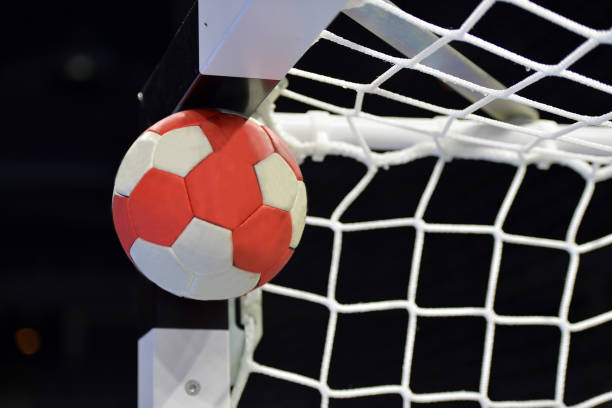
The nets of handball goals must be securely fastened to prevent the ball from flying through. They should be made of durable material that can withstand intense play. The posts and crossbar must be painted in two contrasting colors, typically red and white, to increase visibility and clearly define the goal area.
Strict adherence to these parameters is essential to ensure the integrity and fairness of the game. Uniform dimensions and materials ensure that all players play under the same conditions, which increases equality of opportunity and improves the playing experience. In addition, standardized, high-quality goals contribute to player safety by minimizing the risk of injury and providing stable, reliable playing conditions.
In summary, the right equipment and compliance with established standards are central to the quality of handball and the safety of players. Standardized handball goals enable a consistent and fair playing experience, promote player development, and ensure compliance with the rules of the game. Adherence to these parameters ensures that handball games around the world are played to the same high standards.
Related Posts

Handball throwing power training: The complete guide for more power, technique & throwing speed

Handball training for children


