


Tennis Doubles: Rules, Formation, Tactics and Game Types
1. Introduction
Doubles tennis is one of the most popular formats in tennis – both recreationally and professionally. Unlike singles, doubles involves two teams of two players each competing against each other. This format not only leads to faster rallies and more dynamic gameplay, but also promotes teamwork, communication, and strategic thinking.
In doubles, coordination between partners is crucial, as mistakes are often punished immediately. This makes doubles more tactically demanding and varied than singles. The physical strain is also distributed between two players, allowing for longer rallies.
2. What is a tennis doubles match?
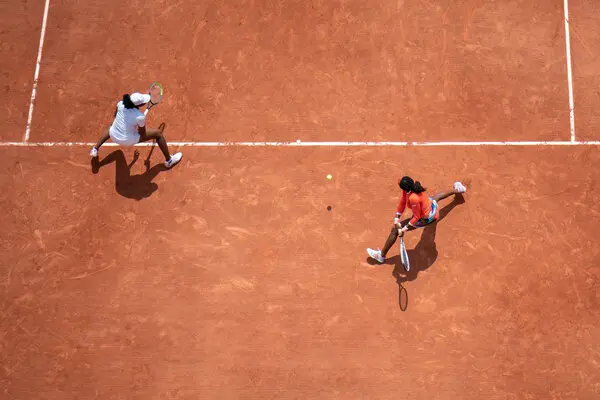
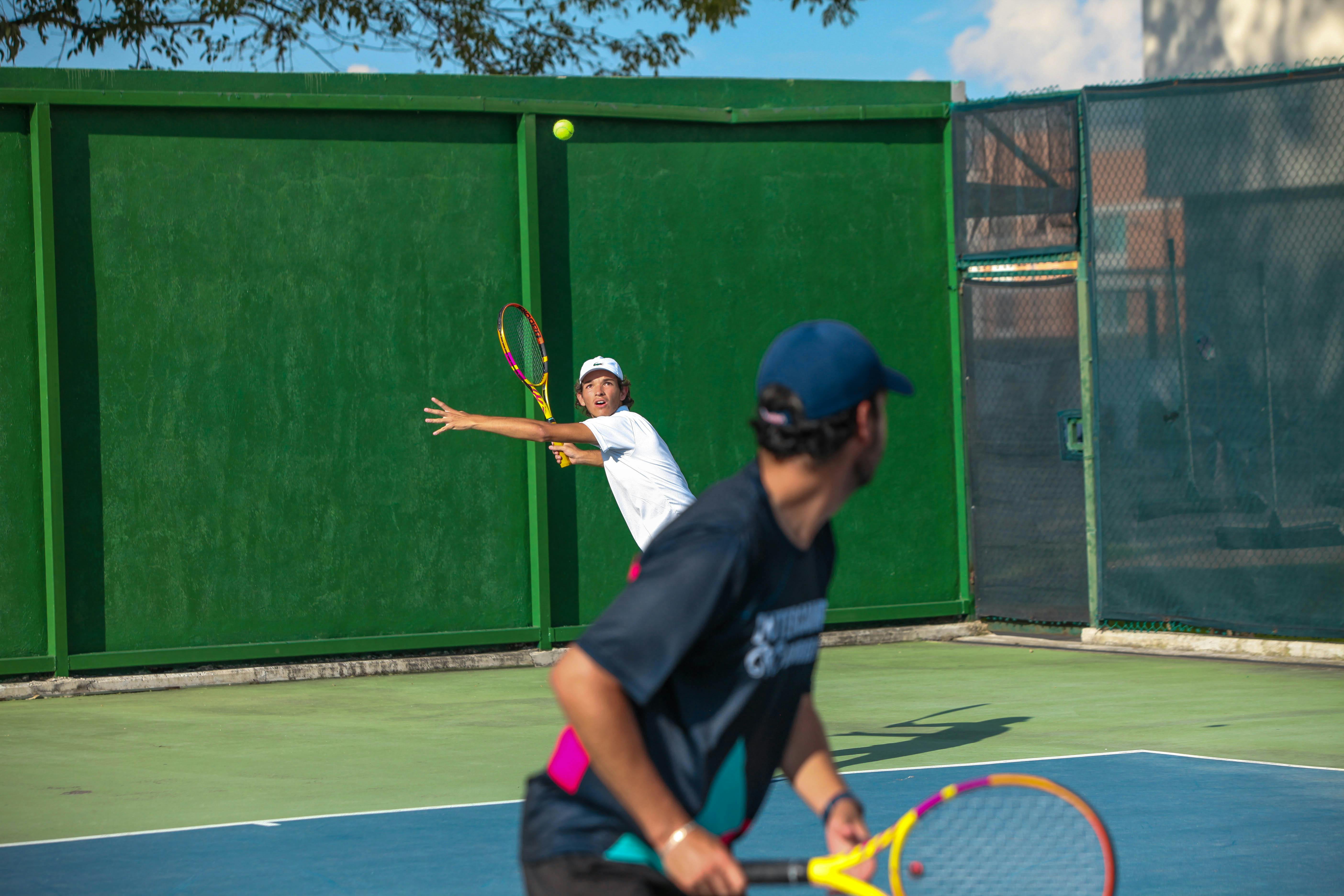
A tennis doubles match consists of four players – two per team. It is played on an extended court that includes the side doubles corridors.
Characteristics of doubles play:
- 4 players: Two per team
- Larger playing field: Double corridors count towards the overall score
- Teamwork: Communication and role distribution are crucial
- Fast rallies: Net play dominates
In professional tennis, there are separate rankings and tournaments for doubles. Doubles is also popular in recreational tennis – especially in mixed doubles tournaments or club championships, as it promotes cooperation between players of different skill levels.
3. Tennis Doubles Rules
Playing field and formation
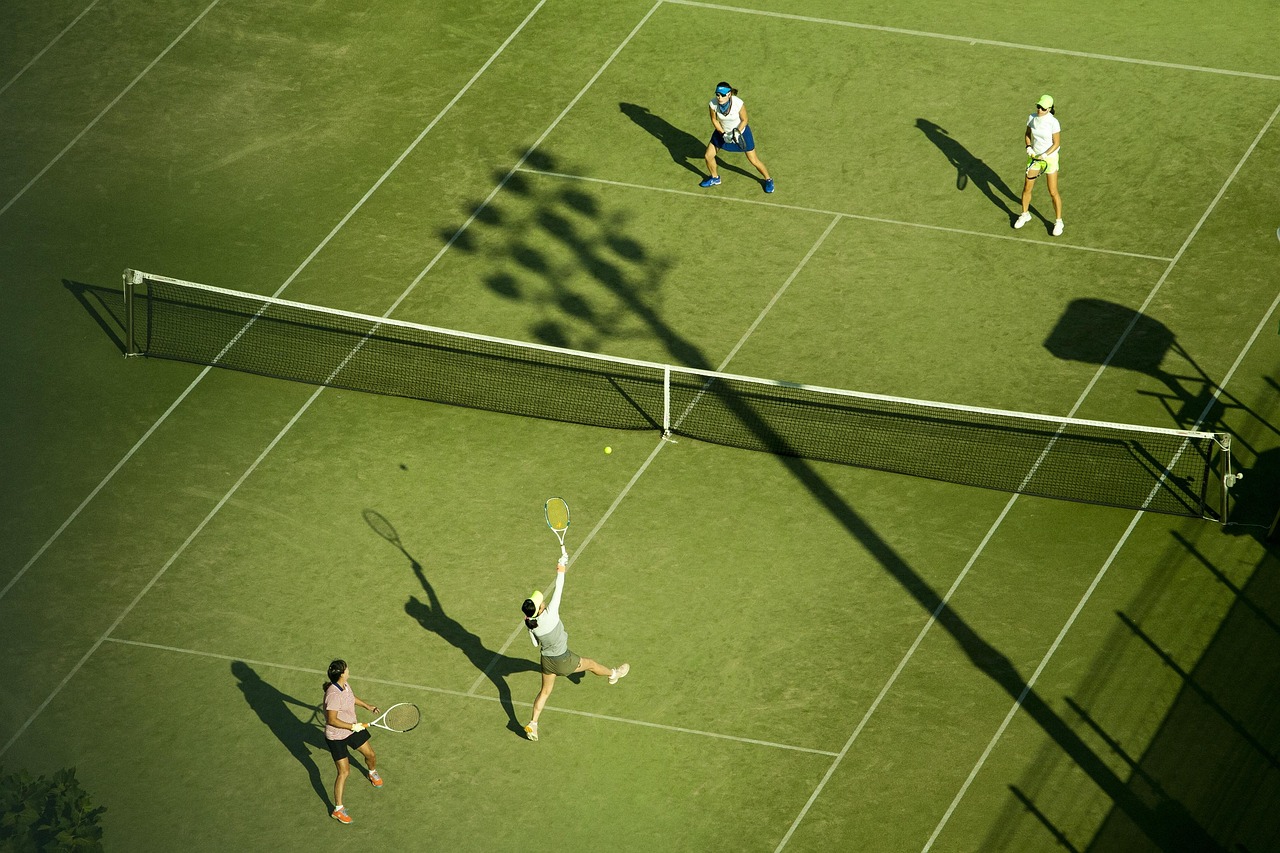
In tennis doubles, the entire court, including the doubles corridors, is used, making the game significantly wider than in singles. The serving line is diagonal: the server stands at the back, their partner at the net, while the receiver stands diagonally opposite, their partner at the baseline. This arrangement ensures optimal court coverage and allows for quick reactions. Furthermore, the diagonal line facilitates coordination between partners, as each player has a clearly defined area to defend.
Serve and return
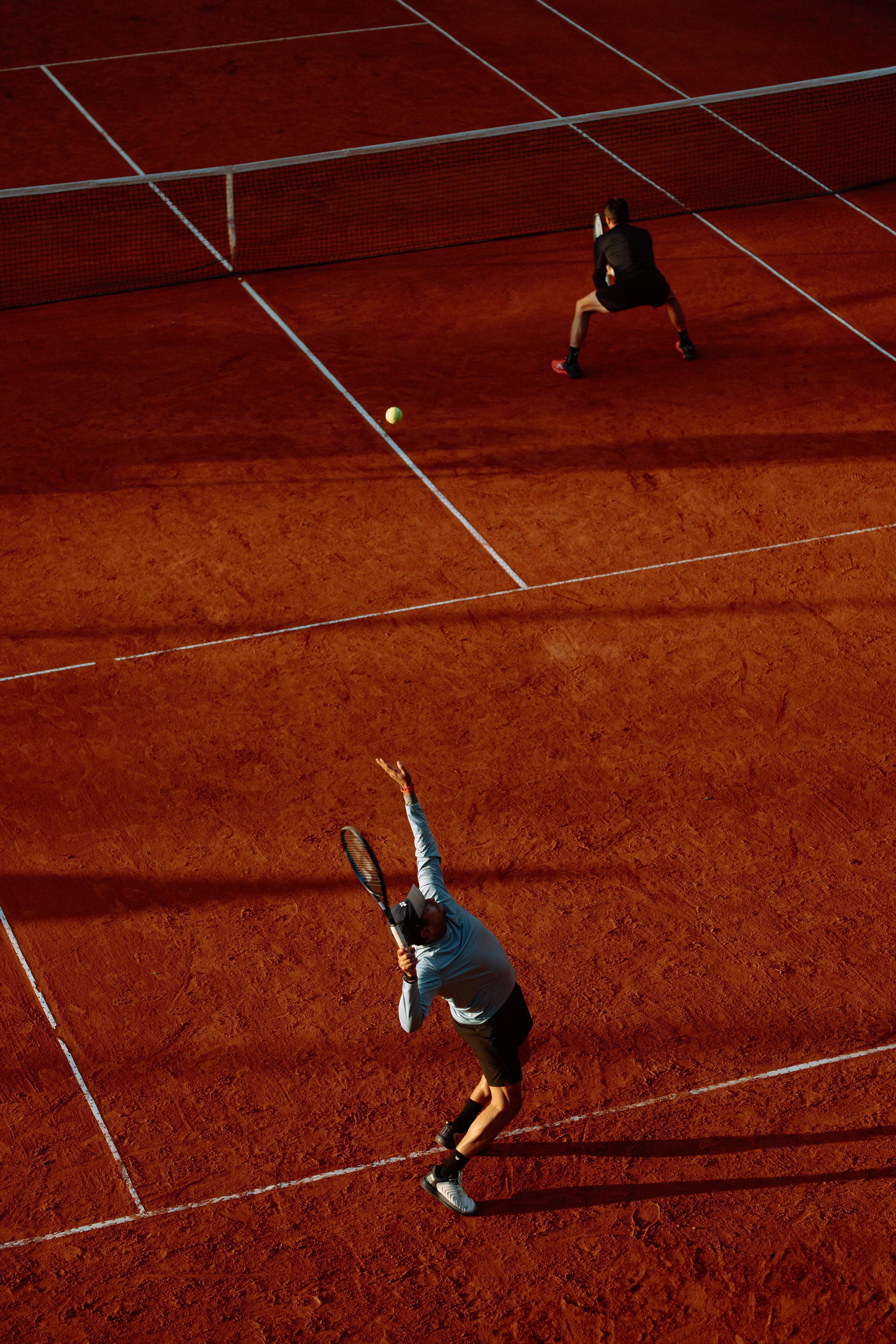
Each player serves in a set order. The server's partner takes the net position to enable aggressive volleys or poaching. The receiver must cover the court from behind and react to the opponent's return. This clear division of roles creates fast rallies and tactical opportunities, such as targeting open spaces or exploiting weaknesses in the opposing team.
Point system
The scoring system is the same as in singles: 15, 30, 40, advantage, and game. In recreational play, the "no-ad" rule is often used: at 40-40, the next point decides the game, making matches more dynamic and shorter.
Let rule
Serves that touch the net but still land in the correct court are replayed. This ensures fair play and prevents a game from being interrupted due to an unlucky serve.
4. Tennis Doubles Lineup
The right setup is crucial for success. Good positioning enables effective net play, quick reactions, and strategic ball distribution.
Standard formations
- Serving team: Server at the back, partner at the net
- Return team: Returner at the back, partner at the T-line
Role distribution
- Net player: Aggressive, responsible for volleys and poaching
- Baseline player: Controls the game from the back and covers open spaces
Rotation
- Switch sides after each game
- Tactical changes are possible within a game to surprise opponents.
5. Doubles partners: Teamwork and communication
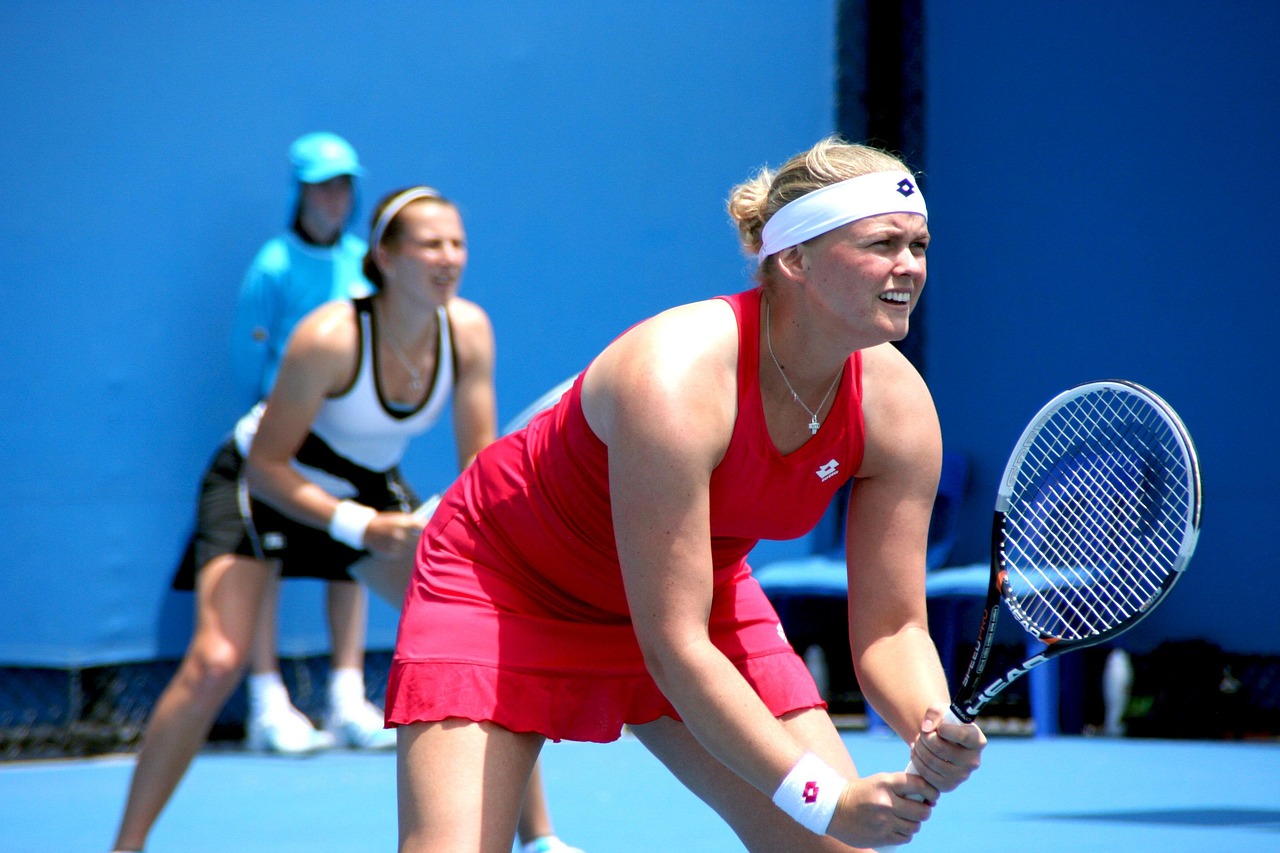
A strong tennis doubles team thrives on harmony, trust, and mutual understanding between the partners. Choosing the right partner can make the difference between a successful match and frequent errors, as each player needs to contribute their strengths optimally.
What is important?
- Complementary playing styles: Ideally, a net player complements a baseline specialist. The net player takes charge of the aggressive play at the net, while the baseline player controls the court from the back and delivers precise shots. This combination increases flexibility and opens up tactical options.
- Trust: Each partner must be able to rely on the other's decisions, especially during fast rallies. This trust reduces uncertainty and promotes confident, quick action on the court.
- Communication: Both verbal ("Mine!", "Praise!") and nonverbal (hand signals, eye contact) constant communication is necessary to convey positioning, changes in tactics or warnings about opponent actions.
Strategic coordination
Additionally, short tactical discussions during the game help to identify opponent strategies and react flexibly to them. Adjusting serve directions, targeting weaker opponents, and covering open spaces also require constant communication.
Psychological component
Team spirit and mutual motivation also play a major role. A partner who offers encouragement or constructive feedback can raise the level of the entire team and positively influence crucial moments in the match.
This combination of technical coordination, communication and psychological support creates a two-person team that not only acts tactically cleverly, but can also react flexibly to every game situation.
6. Tennis Doubles Tactics
Tactics are often more crucial than sheer power. Strategic approach determines the team's effectiveness.
Proven strategies
- Serve-and-volley: Go to the net immediately after the serve.
- Poaching: Net player intercepts the return
- Australian formation: Both players on one side
- I-formation: The net player crouches in the middle to confuse the opponent.
Target zones
- Target weaker opponents
- Make use of open spaces in the field
- Direct the ball exchange in such a way as to create pressure on the opposing formation.
7. Types of play in doubles
In tennis doubles, there are various game variations, each placing different demands on technique, tactics, and teamwork. Every variation presents specific challenges that must be overcome to achieve success.
Mixed Doubles
In mixed doubles, each team consists of one man and one woman. This type of game requires special coordination, as different playing styles and stroke strengths come together. Men often take on aggressive net or baseline roles, while women frequently focus on precision and tactics. The combination demands mutual consideration, clear communication, and the targeted exploitation of each player's strengths.
Men's/Women's Doubles
Classic men's and women's doubles matches are played in both professional and club settings. The focus here is often on strength, speed, and tactical net play. Teams develop strategies to constantly pressure their opponents, for example, through serve-and-volley, targeted poaching, or blocking at the net.
Leisure vs. Competition
The difference between recreational and competitive doubles lies in the intensity, rules, and tactics. Recreational games are often more relaxed, emphasizing fun and shared physical activity, while competitive doubles demands precise plays, strategic thinking, and high concentration.
Famous tennis doubles pairs
- Bob & Mike Bryan: Legendary US duo, known for aggressive net game strategies and outstanding coordination.
- Mahut & Herbert: A top French team with strong baseline control and clever tactics.
- Navratilova & Shriver: A dominant women's doubles team that combined technical precision and quick reactions.
These examples demonstrate how different playing styles and strategies can be successfully implemented. They also serve as inspiration for players who wish to develop their own doubles techniques.
8. Common mistakes and how to avoid them
Typical beginner mistakes:
- Poor communication → clear agreements before the game
- Incorrect positioning → stand diagonally to the opponent
- Passive net play → actively play volleys
- Both players at the back → one should always be controlling the net
Tips for improvement
- Regular double training
- Video analysis of the matches
- Tactical discussions with the partner
9. Further topics for a successful doubles team
9.1 Physical preparation
Speed, agility, and stamina are crucial. Warm-up exercises and specific strength training for legs, arms, and core increase effectiveness.
9.2 Mental Aspects
Staying focused, recognizing opponent strategies, and maintaining emotional control are just as important as technical skills.
9.3 Training techniques
- Simulated match situations
- Reaction exercises on the net
- Variation of serve and return drills
9.4 Equipment and site selection
The right tennis equipment (racket, shoes, nets) and the choice of surface (sand, hard court, grass) influence playing style and risk of injury.
10. Comparison table: Singles vs. Doubles
|
feature |
Single |
Double |
|
Number of players |
2 |
4 |
|
playing field size |
Narrower |
With double corridors |
|
communication |
Not required |
Very important |
|
tactics |
Individually |
Team-oriented |
|
Net game share |
Small amount |
Very high |
11. Conclusion
Doubles tennis is a tactically demanding, team-oriented sport that appeals to both recreational and professional players. With a well-thought-out lineup, clear communication, strategic tactics, and targeted training, its full potential can be realized.
🎾 Tip: Try playing doubles – it's fun, promotes team spirit, increases reaction time and opens up new strategic challenges on the pitch.
Tennis grip types explained: How to hold the tennis racket correctly
Lois Boisson at Roland-Garros 2025: The Rise of a French Talent and the Importance of Quality Equipment
Related Posts

Lois Boisson at Roland-Garros 2025: The Rise of a French Talent and the Importance of Quality Equipment

Tennis grip types explained: How to hold the tennis racket correctly

Tennis Rules: Everything you need to know about the rules of the game

TENNIS LEXICON: specific terms explained

Tennis nets: how to choose the right one?

Which tennis court stretcher to choose?


