


Injuries in football: understanding, treating and preventing
Football is the world's most popular sport, played by millions of people of all ages. Yet, its intense and competitive nature carries inherent risks. Even professional players, with their rigorous training, are not immune to injuries, as seen with Djibril Cissé, Donnarumma against Monaco, and Matarazi's chest injury in the 2006 World Cup final. What are the most common types of injuries, their causes, and how can they be avoided? This article provides the keys to understanding these challenges and playing safely.
Frequency and causes of injuries in football
Football is a sport where physical intensity and frequent contact increase the risk of injury. Here are the main factors:
The physical nature of the game , with its tackles, jumps, and collisions, puts the body under considerable strain. A lack of warm-up, insufficient preparation, or a lifestyle unsuitable for the level of play weakens muscles and joints. The quality of the playing surface and footwear , as well as uneven surfaces or unsuitable shoes, increases the risk of injury.
Risk areas
Certain parts of the body are particularly vulnerable, and mainly the lower body:
Ankles are at the top of the list due to the demanding changes of direction and also because of collisions with other players. Knees are also a major source of football injuries. They suffer greatly from changes of direction and are particularly fragile during adolescence. In terms of muscle injuries , the hamstrings, which are heavily used, account for the majority of injuries in football.
Key statistic : It is estimated that there are between 10 and 35 injuries per 1,000 hours of play , highlighting the need for prevention.
The most common injuries among footballers
Injuries in football vary in severity, but some are particularly common:
Ankle sprains
Causes : Poor footing, tackle or collision.
Treatment : Rest, ice, compression/support of the ankle and rehabilitation.
Dislocations (loosening of joints)
Description : Displacement of a joint, often in the shoulder or knee.
Emergency : Requires immediate medical attention.
Muscle injuries
Examples : Muscle strains, pulls or tears.
Treatment : Rest, physiotherapy and sometimes immobilization.
Anterior cruciate ligament (ACL) ruptures
Severity : One of the most impressive and serious injuries, often requiring surgery and many months of rehabilitation.
Consequences : Several months of rehabilitation, fragile knees and risk of recurrent injury.
Fractures
Commonly located , fractures are often found in the ankles or tibia.
Complexity : May include surgery and prolonged immobilization and many months of absence from the field.
Sever's disease
Target population : Young players undergoing rapid growth due to excessive stress on the heel.
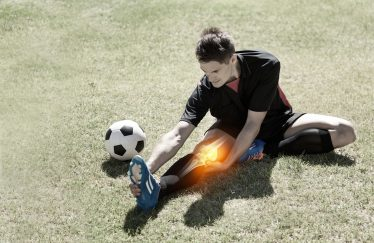
Psychological consequences of injuries
An injury doesn't just affect the body, it also impacts the mind.
Symptoms can include a loss of confidence ; the player may be unable to return to their previous level due to fear of contact or putting too much strain on the injured limb. Depression and anxiety are also common, as long periods of inactivity disrupt schedules and social lives. The lack of activity and complications related to the injury can significantly impact morale. The fear of recurrence , closely linked to this loss of confidence, hinders players' recovery.
Tips for support :
Players should be encouraged to verbalize their emotions and the sensations they experience during practice. Maintaining contact with the team or friends is crucial to prevent the isolation associated with a serious injury.
Rehabilitation should be taken slowly; the road may seem long and winding, but depending on the injury, simply getting back on their feet is already a significant achievement. Focusing on progress, even small steps, during rehabilitation can be beneficial.
It's important to understand that the body changes over time, and injuries are also a factor in this evolution. You may not return to your pre-injury physical condition, so don't be afraid to adapt your game and your approach on the field. In the best-case scenario, you'll regain your fitness and become a more well-rounded player; in the worst-case scenario, you'll become a player with different but still important qualities on the field.
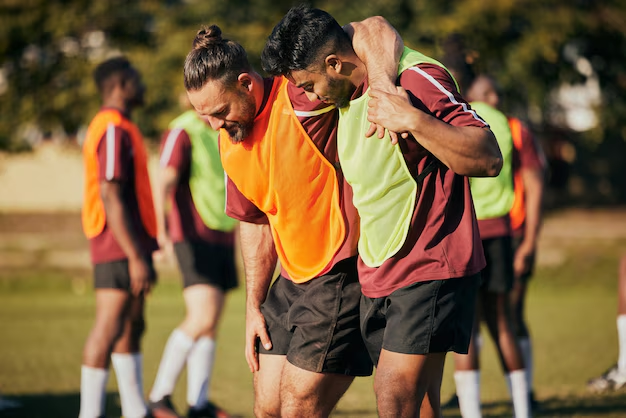
Injury treatment methods
Depending on the severity, different approaches may be recommended. This should be discussed with your doctor.
Minor injuries
Depending on the injury, ice may be applied, compression may be applied to the affected areas, and rest may be advised.
Minor bleeding and wounds should be disinfected before applying dressings.
Painkillers can be helpful but must be prescribed by your doctor.
Severe but non-surgical cases
Rehabilitation exercises , after injuries requiring long rest or immobilization, may be prescribed under the guidance of an osteopath or physiotherapist.
Surgery
Indications : In cases of ligament ruptures or fractures, the doctor may recommend surgery to repair the injury.
Post-operation : Gradual rehabilitation is essential before any return to the field.
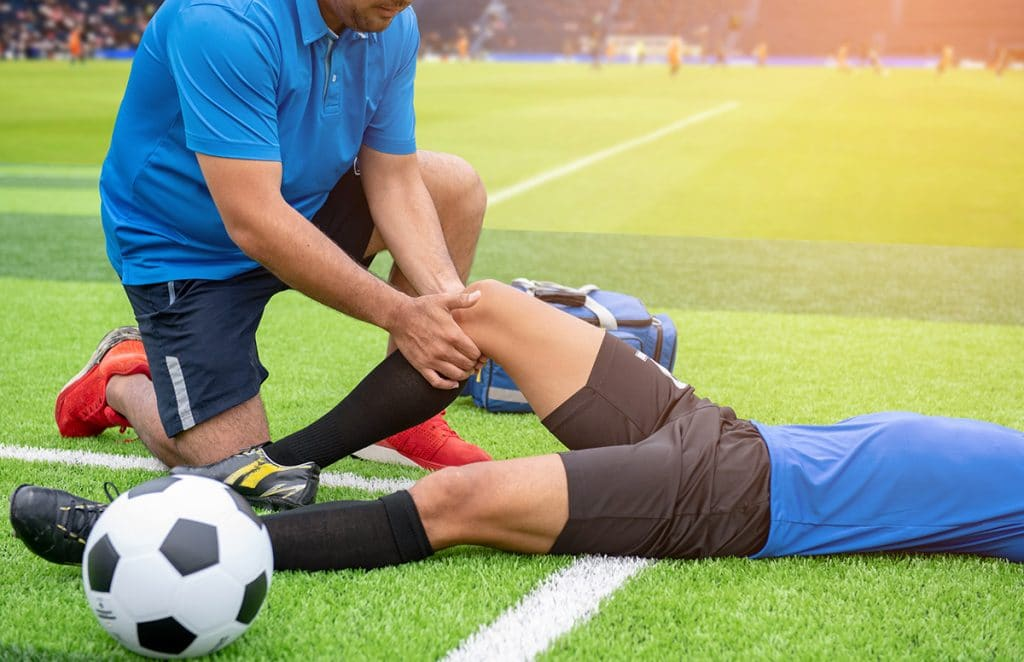
Injury prevention in football
Here's how to reduce the risk of injury:
- Warm-up : Essential to prepare muscles for exertion and avoid strains and tears.
Here is a non-exhaustive list of possible warm-up exercises:
Light running: 5 to 10 minutes to increase body temperature.
Dynamic stretches: Lunges, trunk rotations, leg swings to activate the muscles.
High knees: To prepare the quadriceps and hips.
Heel-to-buttocks: To activate the hamstrings.
Side steps: To warm up the adductors and work on coordination.
Short sprint: 2 to 3 repetitions of 10 meters to accustom the muscles to more intense efforts.
- Physical strengthening : Work the targeted muscles in your position and activities to stabilize the body and allow it to absorb the shocks associated with the practice.
- Appropriate equipment : Depending on your needs, quality shoes and shin guards or braces are essential.
- Technical training : Learning to avoid dangerous movements.
- Load management : Learning to manage the training load that your body can handle, especially for young people and amateurs.
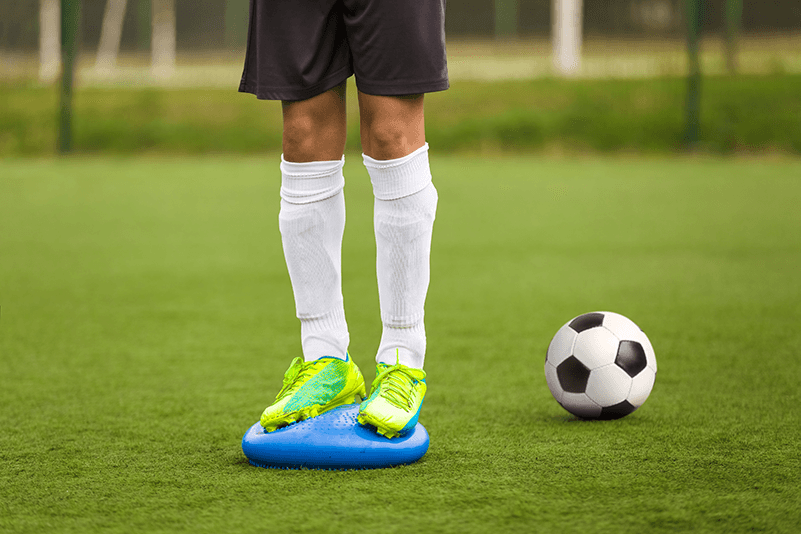
Advice for young players and their parents
Young players can be prone to injury and may require special support:
Adapted training program : An experienced coach is key, one who will have the experience to play the different young players in the places where they are best suited for the team and will put in place training protocols adapted to the physical condition of the players.
The balance between training and rest : Necessary to avoid overexertion and limit the risk of injury. This balance is theoretically applicable everywhere, but is especially crucial in the lives of young athletes.
The various warning signs : Persistent pain, lameness, or excessive fatigue should be assessed quickly.

Conclusion
Injuries are an inherent part of football, but proper preparation and recovery can minimize them. Follow our recommendations to play and enjoy this sport safely. With our football equipment and our paramedical and sports care supplies, you'll be well supported! So, lace up your boots and live your passion with peace of mind! Play, but play safely!
Related Posts

The Best Ideas to Please a Football Fan

PSG Champions of Europe 2025: A Historic Victory and a Lesson in Discipline

Football conditioning training: a comprehensive handbook

Best exercises for speed and agility

Football Rules: The Complete Handbook

How does one become a professional footballer?


